


How to Choose Half Face Respirators for Sale That Fit Your Needs
- Nivi Watson

- Jul 8
- 6 min read
Have you ever stood in front of a wall of half face respirators, completely overwhelmed by the options? Are you wondering whether that budget-friendly model will actually protect you, or if you're about to waste your hard-earned money? Perhaps you're not even sure what size you need or which filters work best for your specific job?
Choosing the right half face respirator isn't just about grabbing the first one you see on sale. It's about finding respiratory protection that genuinely fits your face, suits your working environment, and keeps you safe from harmful particles, gases, or vapours. Whether you're a tradie working on construction sites across Australia, a DIY enthusiast tackling weekend projects, or someone who needs reliable protection in an industrial setting, getting this decision right matters more than you might think.
In this guide, we'll walk you through everything you need to know about selecting the perfect half face respirator. You'll discover how these devices work, learn to measure your face for a proper fit, understand the difference between filter types, and pick up tips on avoiding common buying mistakes. By the end, you'll feel confident making a purchase that truly meets your needs without breaking the bank.
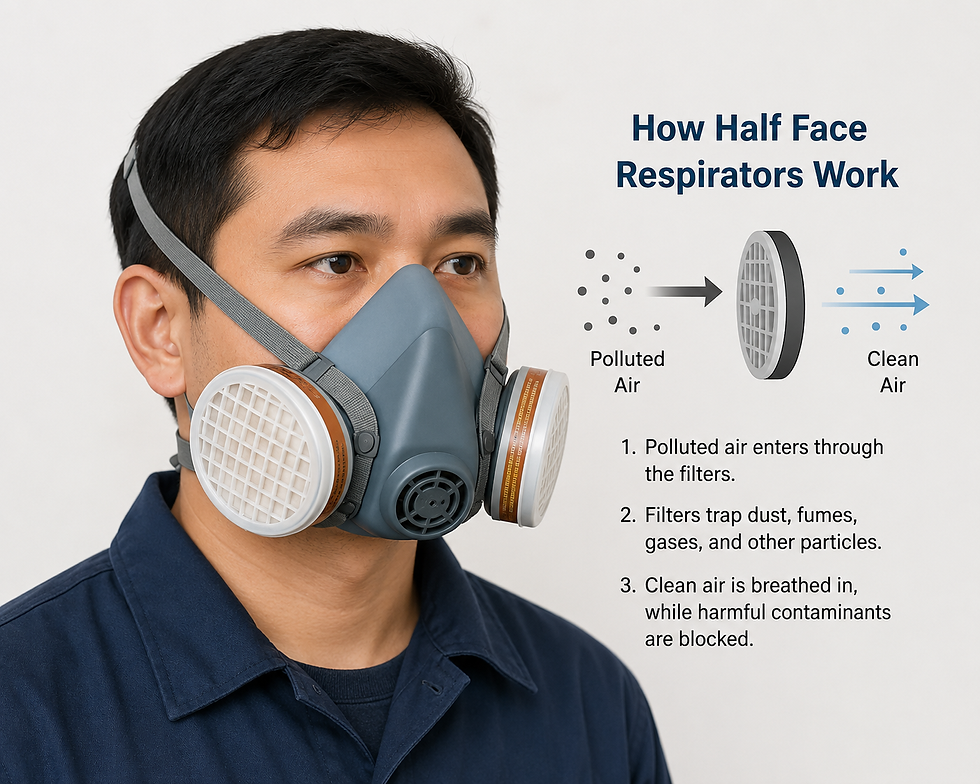
What Is a Half Face Respirator and How Does It Work?
A half face respirator is a reusable breathing device that covers your nose, mouth, and chin. It creates a seal against your face and filters the air you breathe through replaceable cartridges or filters. Unlike disposable masks, these respirators offer superior protection and can be used repeatedly with proper maintenance.
Key Components of a Half Face Respirator
The facepiece forms the main body of the respirator, typically made from silicone or rubber for comfort and durability. Attached to this are one or two filter housings where you'll click in your chosen cartridges. Adjustable head straps keep everything secure, while an exhalation valve allows you to breathe out easily without fogging up your safety glasses.
Half Face vs Full Face Respirators: Which Do You Actually Need?
Half face models protect your respiratory system but leave your eyes exposed. Full face respirators cover your entire face, providing eye protection too. For most applications involving dust, fumes, or light chemical exposure, a half face respirator paired with separate safety goggles works brilliantly. However, if you're dealing with substances that could irritate or damage your eyes, a full face option might be worth considering.
What Are Half Face Respirators Used For?
These versatile protective devices pop up across countless industries and applications throughout Australia. Understanding where they're commonly used helps you identify whether one suits your specific situation.
Common Industries and Applications in Australia
In construction, workers rely on half face respirators when cutting concrete, sanding surfaces, or working around silica dust. Painters and spray applicators use them to protect against harmful vapours and overspray. Mining operations, manufacturing facilities, and agricultural settings all depend on these respirators to keep workers safe from airborne hazards.
Healthcare workers occasionally use them during specific procedures, while automotive professionals wear them when spray painting vehicles or working with solvents. The beauty of half face respirators lies in their adaptability—swap out the filters, and the same device works across multiple hazard types.
DIY and Home Use Scenarios
You don't need to be a professional to benefit from proper respiratory protection. Home renovators tackling asbestos-containing materials absolutely need quality protection. Hobbyist woodworkers, spray painters, and anyone working with epoxy resins or fibreglass should consider investing in a half face respirator. Even gardeners dealing with pesticides or dusty potting mix can benefit from this level of protection.
How Do I Know What Size Respirator I Need?
Getting the size right is absolutely critical. A poorly fitting respirator lets contaminated air leak around the edges, defeating the entire purpose of wearing one.

Understanding Respirator Sizing (Small, Medium, Large)
Most manufacturers offer small, medium, and large sizes. Medium fits the majority of adult faces, but don't assume you're average. Women often find small sizes more comfortable, while larger men typically need large fittings. Some brands run differently, so always check the manufacturer's sizing guide.
How to Measure Your Face for a Proper Fit
Grab a flexible measuring tape. Measure from the bridge of your nose to just below your chin—this is your face length. Next, measure across your face at the widest point of your cheekbones. Compare these measurements to the manufacturer's sizing chart. When in doubt, many suppliers offer fit kits containing multiple sizes for testing.
Why Fit Testing Is Essential for Workplace Safety
Australian workplace safety regulations require fit testing for employees using tight-fitting respirators. This process confirms the respirator creates a proper seal on your specific face shape. Qualitative fit testing uses taste or smell to detect leaks, while quantitative testing measures actual particle penetration. For workplace use, don't skip this step—it's not just good practice, it's often legally required.
What Should I Look for When Buying a Half Face Respirator?
Several factors separate excellent respirators from mediocre ones. Knowing what to look for saves you from expensive mistakes.
Material Quality and Durability
Premium silicone facepieces offer superior comfort and longevity compared to cheaper rubber alternatives. They're softer against your skin, resist degradation from chemicals, and maintain their shape over time. Check the construction quality of straps, buckles, and filter housings too—these components take significant wear.
Comfort Features for Extended Wear
If you're wearing your respirator for hours at a stretch, comfort features become non-negotiable. Look for:
- Soft, hypoallergenic inner sealing surfaces
- Wide, adjustable head straps that don't dig in
- Low breathing resistance for easier inhalation
- Effective exhalation valves that prevent moisture buildup
Compatibility with Filters and Cartridges
Make sure your chosen respirator accepts readily available filters. Some proprietary systems lock you into expensive replacement cartridges. Popular brands like 3M, Honeywell, and Sundström offer wide filter ranges across Australian suppliers.
Australian Safety Standards and Certifications
Always verify your respirator meets AS/NZS 1716 standards. This certification confirms the device has been tested and approved for use in Australia. Don't gamble on uncertified imports—your lungs deserve better.
Understanding Filter Types: Which One Suits Your Needs?
Filters determine what hazards your respirator protects against. Choosing incorrectly leaves you exposed despite wearing protection.
Particulate Filters (P1, P2, P3 Ratings Explained)
P1 filters capture mechanically generated particles like dust and pollen. P2 filters add protection against thermally generated particles such as welding fumes. P3 filters offer the highest particulate protection, blocking highly toxic dust including asbestos fibres. For most construction and DIY work, P2 filters provide adequate protection.
Gas and Vapour Cartridges
Different cartridges protect against different chemical families. A-class cartridges handle organic vapours from solvents and paints. B-class works against inorganic gases. E-class targets acidic gases, while K-class handles ammonia. Always match your cartridge to your specific chemical exposure.
Combination Filters for Multi-Hazard Environments
Working around both particles and chemicals? Combination filters tackle multiple hazard types simultaneously. An ABEK1P2 filter, for example, protects against organic vapours, inorganic gases, acidic gases, ammonia, and particulates all at once.
How Often Should You Replace a Half Face Respirator?
Even quality respirators don't last forever. Knowing when to replace components keeps your protection effective.
Signs Your Respirator Needs Replacing
Replace your respirator immediately if you notice cracks, tears, or hardening of the facepiece. Straps that no longer hold tension compromise the seal. If you taste or smell contaminants while wearing a properly fitted respirator with fresh filters, something's wrong.
Filter and Cartridge Replacement Schedules
Particulate filters need replacing when breathing becomes noticeably harder. Gas cartridges have specific service lives—follow manufacturer recommendations based on your exposure levels. Many workplaces implement change schedules based on hours of use rather than waiting for breakthrough.
Top Mistakes to Avoid When Buying Half Face Respirators
Don't fall into these common traps. Buying based solely on price often leads to uncomfortable, poorly fitting respirators that end up sitting in a drawer. Assuming all filters work for all hazards puts your health at risk. Skipping fit testing means you might be breathing contaminated air without realising. Finally, forgetting to budget for replacement filters leaves you unprotected when your current ones expire.
Budget Considerations: Finding Value Without Compromising Safety
Quality respiratory protection needn't cost a fortune, but cutting corners on safety equipment rarely pays off. Mid-range respirators from reputable brands typically offer the best balance between price and performance. Factor ongoing filter costs into your budget—some cheaper respirators require expensive proprietary cartridges that quickly exceed the cost of premium alternatives.
Making a Confident Purchase Decision
Choosing the right half face respirator comes down to understanding your specific needs, measuring for proper fit, selecting appropriate filters, and investing in quality that meets Australian standards. Whether you're protecting yourself on a worksite or during weekend DIY projects, taking time to research your options pays dividends in comfort, protection, and long-term value.
Remember, your respiratory health isn't something to gamble with. A properly fitted, quality respirator with the right filters creates a genuine barrier between you and harmful airborne substances. Take the measurements, check the certifications, and don't hesitate to ask suppliers for guidance.
You've now got the knowledge to shop confidently for half face respirators that genuinely fit your needs. So go ahead, find that perfect respirator, and breathe easy knowing you've made a smart, informed choice. Your lungs will thank you for it!



Comments